
Underfloor Heating and Flooring: Which Options Really Work and Which to Avoid for Croydon Homes
Updated: Jul 28
If you are considering underfloor heating for your Croydon home, it is important to understand how your flooring choice can affect the performance of the system. The right flooring can help heat move efficiently through the room, support comfort underfoot, and contribute to a practical and attractive interior. By contrast, the wrong flooring choice may reduce efficiency, affect heat output, and create avoidable problems over time.
This guide is intended to help homeowners better understand which types of flooring generally work well with underfloor heating and which may be less suitable. While Alba Flooring does not install or provide underfloor heating systems, we believe it is important for customers to have clear, reliable information when planning a flooring project alongside this type of heating. From engineered wood and luxury vinyl tiles to porcelain and ceramic surfaces, understanding the characteristics of each material can help you make a more informed decision.
Flooring Options for Underfloor Heating and the Main Principle to Keep in Mind
When assessing flooring for use with underfloor heating, one of the main considerations is how effectively the material allows heat to pass through to the surface above. Some flooring types are generally more compatible than others, so it is worth understanding how each option responds to temperature changes and ongoing use. This can help homeowners make decisions that support both heating efficiency and the long-term condition of the floor.
Engineered Wood
Engineered wood is often considered a suitable option for properties with underfloor heating. It offers the appearance and character of real wood while being manufactured in a way that provides greater stability than solid timber. Because of its layered construction, engineered wood is typically better able to cope with the gradual temperature fluctuations associated with heated floors.
Why it is often considered suitable:
It provides the natural look and warmth that many homeowners want in living spaces.
Its construction helps reduce the risk of excessive movement caused by changes in temperature.
It is commonly chosen for areas such as living rooms, bedrooms, and dining rooms, where appearance and everyday practicality both matter.

LVT (Luxury Vinyl Tiles)
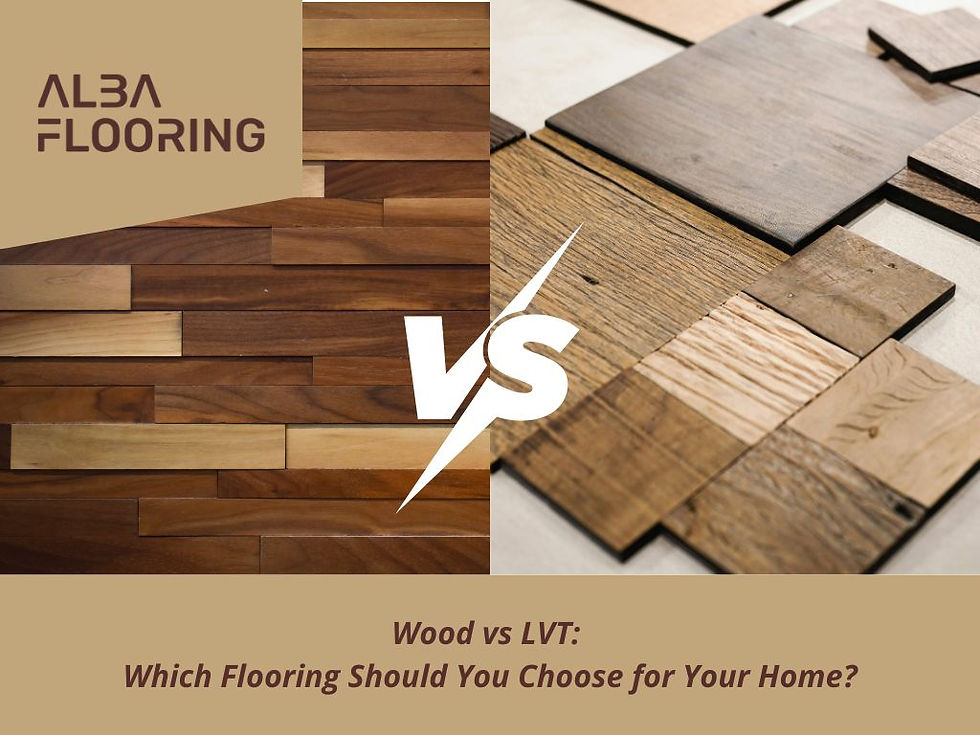
Luxury Vinyl Tiles, often referred to as LVT, are widely regarded as a practical flooring option for homes with underfloor heating. They are designed to replicate the appearance of natural materials such as wood or stone while also offering a durable and easy to maintain surface. Because LVT is manufactured for stability and everyday use, it is often selected for spaces where homeowners want both visual appeal and practicality.
Why it is often considered suitable:
It can achieve the look of timber or stone while offering a more resilient surface for busy households.
It is frequently chosen for areas such as kitchens, hallways, and utility rooms, where durability and ease of cleaning are especially important.
It is generally known for good heat transfer, which can support the efficient performance of an underfloor heating system when installed in line with manufacturer guidance.
Alba Flooring does not provide underfloor heating services, but guides like this are intended to help homeowners better understand how different flooring materials may perform when used alongside this type of system.
Tiles:
Tiles are one of the most efficient flooring options for underfloor heating due to their ability to conduct heat effectively. Ceramic, porcelain, or marble tiles retain and evenly distribute heat, making them perfect for areas with underfloor heating systems.
Why it works:
High durability and resistance to moisture, making tiles the ideal option for wet areas such as bathrooms, kitchens, and utility rooms.
Tiles conduct heat very effectively, ensuring your home remains comfortable.
Easy to clean and maintain, which adds to the practicality of tiles in high-use spaces.

Flooring to Avoid
While some flooring materials work seamlessly with underfloor heating, others can cause complications, reducing efficiency and even damaging your flooring system.
Solid Wood Flooring: While solid wood offers timeless beauty, it is highly susceptible to temperature changes. Solid wood can expand and contract when exposed to heat, which could lead to gaps, warping, or cracking. This makes it unsuitable for underfloor heating systems.
Carpet: Carpet is an insulator, which means it can interfere with the efficient heat transfer of your underfloor heating system. Using carpet with underfloor heating can reduce the system’s effectiveness, leading to higher energy bills and less comfort.
Choosing Flooring for Underfloor Heating
When selecting flooring for use with underfloor heating, it is important to consider heat transfer, durability, moisture resistance, and the overall look you want in the room. The right choice often depends on how the space is used.
For efficient heat transfer: LVT and tiles are often preferred because they generally allow heat to pass through effectively.
For family homes: LVT is popular for its durability and low maintenance, while engineered wood can offer a natural look with good everyday practicality.
For kitchens and hallways: LVT and tiles are commonly chosen for their hard-wearing surfaces, ease of cleaning, and reliable performance in high-traffic areas.
For bathrooms: Tiles are often considered the most suitable option due to their moisture resistance and compatibility with heated floors.
For comfort and appearance: Engineered wood can create a warm, natural finish, while LVT may provide a slightly softer feel underfoot and a more contemporary practical solution.
Alba Flooring does not provide underfloor heating services. This guide is intended purely to inform homeowners who are researching flooring choices to use alongside underfloor heating systems.

Installation Considerations, Service Area, and How Alba Flooring Can Help
When planning flooring for use with underfloor heating, proper preparation and installation are essential. The heating system itself should always be designed and installed by a qualified underfloor heating specialist, while the flooring should then be selected and fitted in line with the manufacturer’s guidance.
A few key points to keep in mind include:
Subfloor preparation: the surface should be level, dry, and suitable for the flooring being installed.
Correct fitting: precise installation helps support both the appearance and long-term performance of the floor.
Product compatibility: flooring should always be checked for suitability with underfloor heating before installation.
Professional guidance: homeowners benefit from clear advice when choosing materials for rooms with heated floors.
Alba Flooring does not install or supply underfloor heating systems. However, we do help customers choose suitable flooring products and provide expert flooring supply and fitting services across Croydon, South London, and, for larger projects, nationwide.
Customers can also visit the Alba Flooring showroom at 574 Wickham Road, Shirley, CR0 8DN to explore a wide range of flooring options, including products from respected brands such as Amtico, Woodpecker, and Tuscania Ceramiche. The purpose of this guide is to inform readers about flooring choices that may work well alongside underfloor heating, so they can plan their project with greater confidence.
For more information, or to arrange a free consultation, call us today at 020 8777 5958, or visit our Instagram page.
FAQs:
For answers to your questions or further details on flooring options for underfloor heating, feel free to visit our FAQ page.
Related reading
Thinking about new floors? Explore our flooring for underfloor heating.


Comments